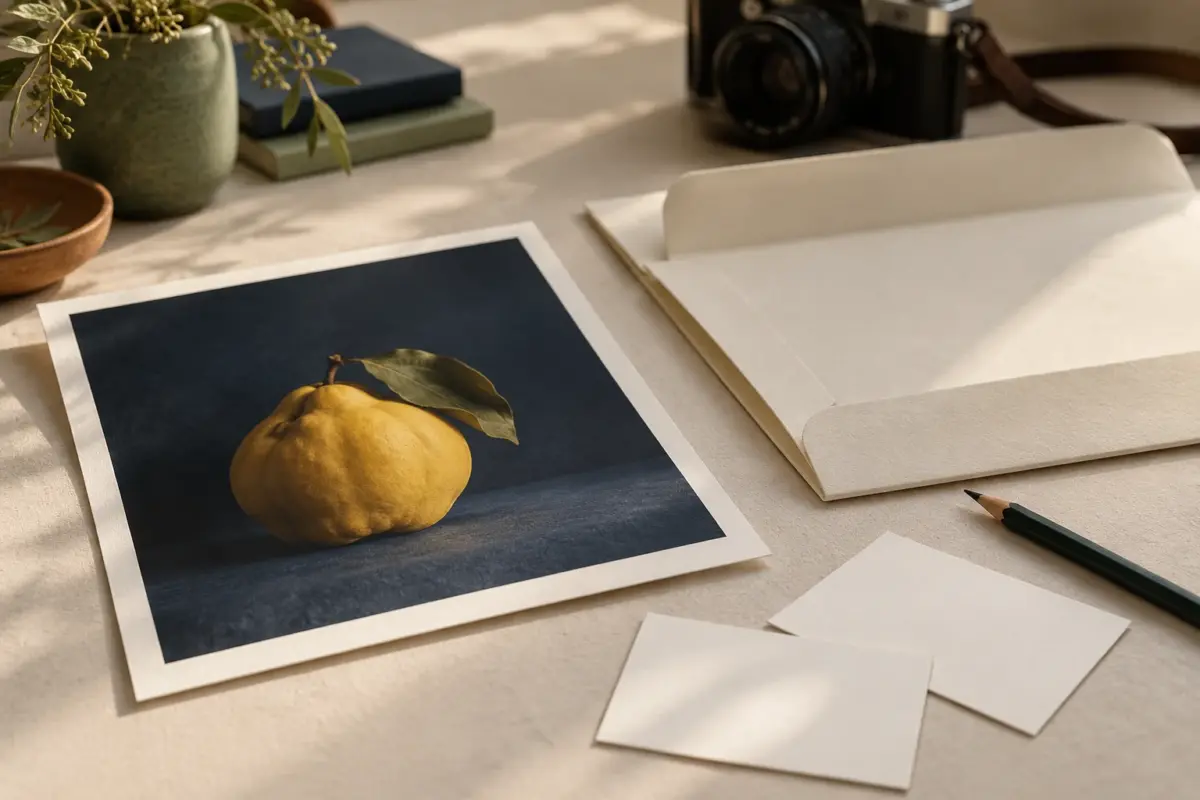
You find a photograph that would suit your business content, then plan to adjust its colors and add some text. You are ready to credit the photographer. Does that mean you can edit and post it? Not necessarily. With Creative Commons photo licenses, attribution is one obligation, not a substitute for every other permission.
Match three things: the specific photo covered by the license, the changes you want to make, and how you will share the result. A photo you may display unchanged in an article is not automatically available for an adapted promotional image. Start with the intended use, not the download button.
Separate permission to use, adapt, and share

Imagine a photographer’s still-life image. You want to use it in a catalog post, change the background color, and send the finished artwork to an account manager. Those are different actions: using a copy, making changes, and sharing the result. The creator’s chosen license supplies permissions and conditions that you need to consider together.
Open the original source page and follow its license link. Check that the notice covers your chosen photograph, not just the page’s text or another asset. Keep the creator’s name, license version, and any restrictions attached to the file. A “free” label, image-search result, or repost is not equivalent evidence of permission.
Creative Commons explains that all six licenses include BY, the attribution condition. They differ in matters including commercial use and adaptations. Writing “credit to owner” cannot turn a restricted photograph into material you may use for any purpose.
Do not assume every crop, compression, or format change necessarily creates an adaptation. That question depends on applicable copyright law; CC also distinguishes technical format changes from adaptations. If your planned edit meaningfully transforms the work, do not rely only on your impression that the change is minor.
Read BY, SA, NC, and ND against your intended use
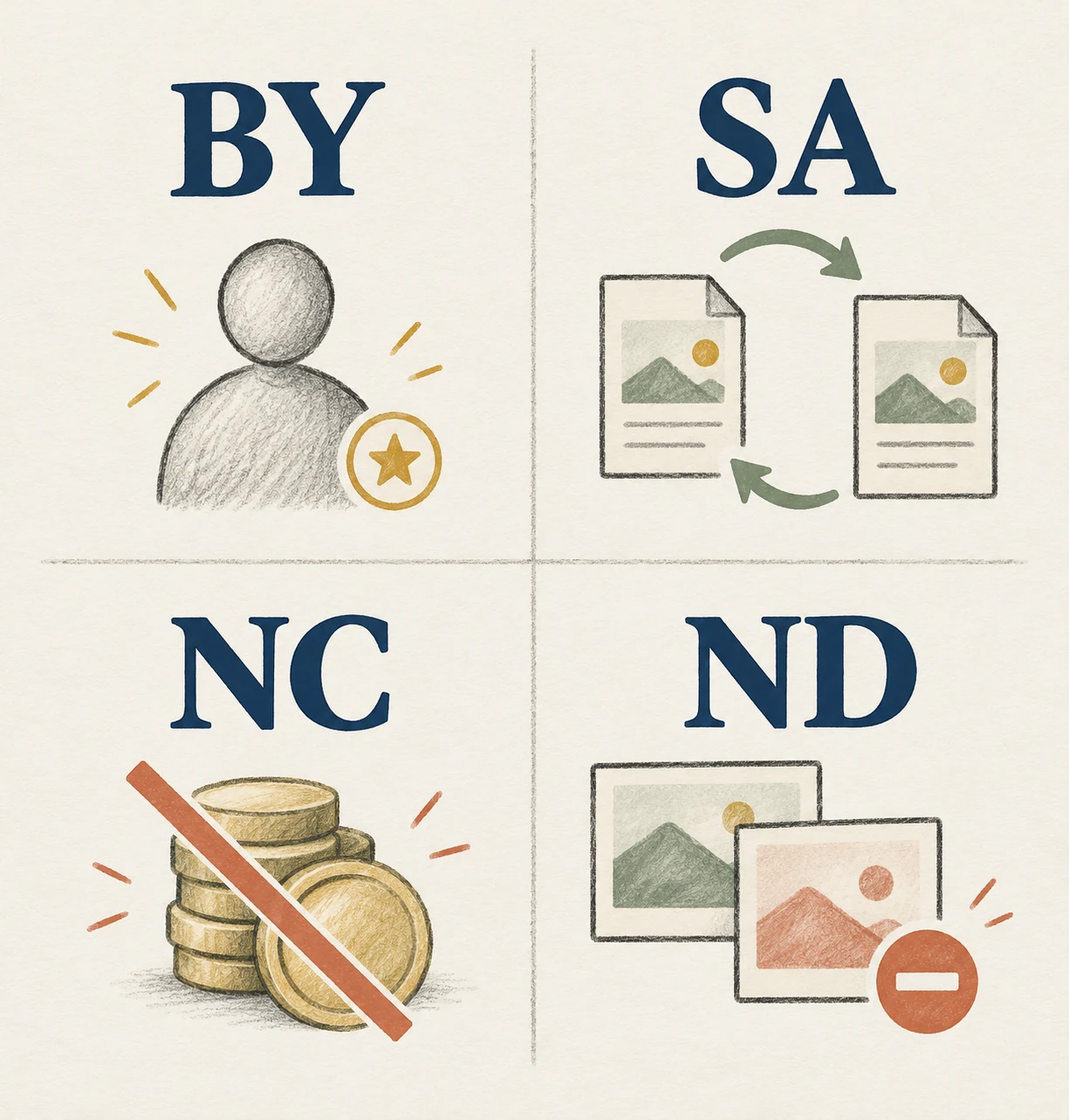
BY — Attribution. Give attribution as the license requires. CC BY permits use and adaptation, including commercially, subject to its conditions. A freely downloadable file still needs appropriate credit. Credit also does not mean the creator endorses your brand or message.
SA — ShareAlike. If you share an adaptation, make it available under the same or a compatible license. “Compatible” does not mean any license you prefer. Before adding a photo to a composite, consider this obligation alongside any different restrictions you planned to put on the distributed result.
NC — NonCommercial. The restriction concerns use that is not primarily intended for commercial advantage or monetary compensation. It is not decided simply by whether the account owner is a business or a nonprofit. A product promotion needs assessment of its actual purpose, rather than a convenient “personal” label.
ND — NoDerivatives. Do not rely on an ND license to share an adaptation. Making an adaptation to keep to yourself differs from sharing it. CC’s educational guidance also warns that sending an adaptation to others is not automatically allowed just because the recipients are private. A closed group is not a reliable shortcut.
For example, a CC BY photo can be edited for business content when its conditions are met. BY-SA adds obligations when an adaptation is shared; BY-NC does not grant the same commercial permission; BY-ND is not unrestricted material for sharing an adapted version. Read the complete combination, rather than selecting the one element that suits your plan.
For business content photos you intend to edit and distribute, a conservative choice is material with clear commercial and adaptation permissions, without NC or ND, while meeting BY and SA conditions where applicable. That is a practical sourcing policy, not a legal ruling on every possible use. If the terms do not fit, request specific additional permission or choose different material.
Keep permission records and check the rights of people shown
Keep the source URL, creator’s name, title if supplied, license version and link, and a copy of the permission information available when you acquired the material. Record your changes as well. This makes permission to edit and share photos easier to trace when files move between a content creator, editor, and account manager.
CC’s recommended attribution practice is often summarized as title, author, source, and license. Include a change notice and retain required supplied notices. A hypothetical format such as “Photo Title — Creator; original source; CC BY 4.0; colors adjusted” needs the real details and links. It is not a generic credit to paste under an unidentified image.
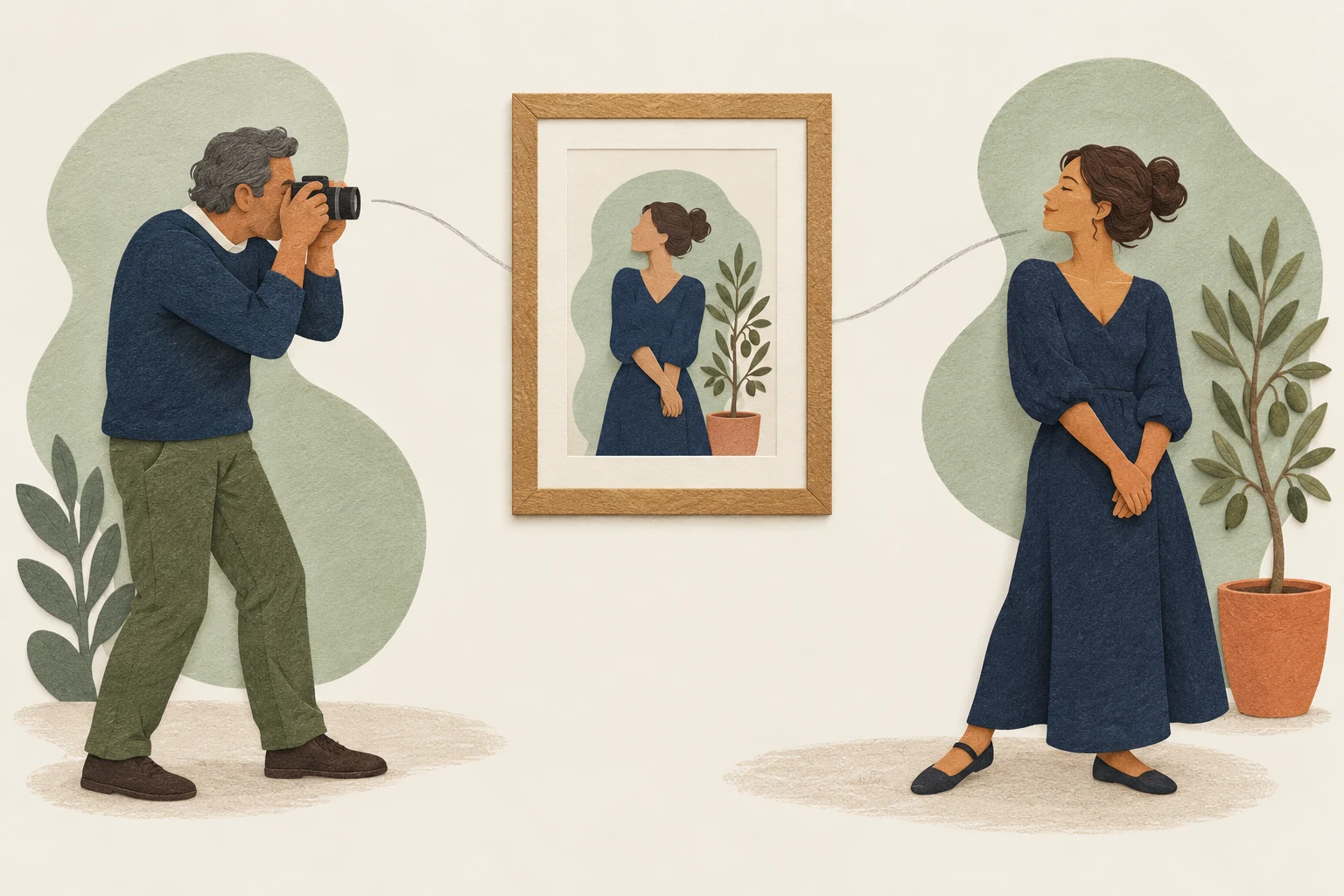
Copyright permission does not automatically settle the rights of people pictured. Privacy, publicity, or other third-party rights may require separate permission. Even CC0 does not guarantee that all third-party rights have been cleared. Separate “who can authorize use of this work?” from “does this use of the person’s likeness have the permissions it needs?”.
If the embedded creator’s name conflicts with the uploader’s identity, or an unresolved permission dispute appears, pause. A license badge does not resolve that contradiction. Seek competent advice for risky uses or specific legal decisions. This article offers a way to understand conditions, not clearance for any particular photograph.
Before sending material to SCI Magie for retouching, explain where it came from, what you want changed, and how you plan to use it. Supply only material you have the right to provide. An editing consultation helps discuss visual needs; it does not replace the photographer’s or subject’s permission. Powered by Shaniba Creative Industry.
AI-generated concept illustrations; not customer photographs, cleared CC assets, or permission documents.
References
Creative Commons: License Types · CC BY-ND 4.0: full terms · CC attribution practices.